NOVAS Statement on Budget 2027


For the second successive year and amid an unprecedented homelessness crisis, there has been no specific mention of homelessness in Budget 2027.

NOVAS is deeply concerned by the lack of clarity in today’s Budget announcement on how the Government intends to tackle the ever increasing homelessness crisis, particularly in terms of resourcing homeless services and investing in effective prevention measures.

While we welcome the capital investment of €3 billion in social housing, we are calling on the Government to return to properly funding the Tenant in Situ Scheme, which is an important measure in preventing families and individuals from entering homelessness.

Homelessness figures have never been higher and we need to see significantly greater investment in measures that prevent homelessness before it occurs. Publication of the Homeless Prevention Framework, the Child and Family Homelessness Action Plan and the HAP Review is urgent. The budget refers to the the Child and Family Homelessness Action Plan but there is no indication of how it will be resourced.

There are some positive elements within Budget 2027. NOVAS welcomes the commitment to deliver 11,250 new-build social homes in 2027. We also welcome the allocation of €2.2 billion for the Housing Assistance Payment (HAP) and other rent supports, as well as the introduction of a new 7% Derelict Property Tax.

The commitment to deliver 11,250 social homes in 2027 is broadly consistent with existing Government targets. However, the Government has failed to meet its social housing construction targets in every year since 2018. Today’s announcement provides limited detail on how the 2027 target will be achieved, raising concerns about whether the promised number of homes will ultimately be delivered.

At a time when homelessness is at record levels, Budget 2027 required a clear and adequately resourced response to the crisis. Investment in social housing is essential, but it must be matched by investment in homelessness services, prevention, housing supports and measures that keep people in their homes in the first place.
NOVAS Annual Report: People longer in emergency homeless accommodation

Organisation warns prolonged stays are reducing access to emergency accommodation as pathways into secure housing remain limited.

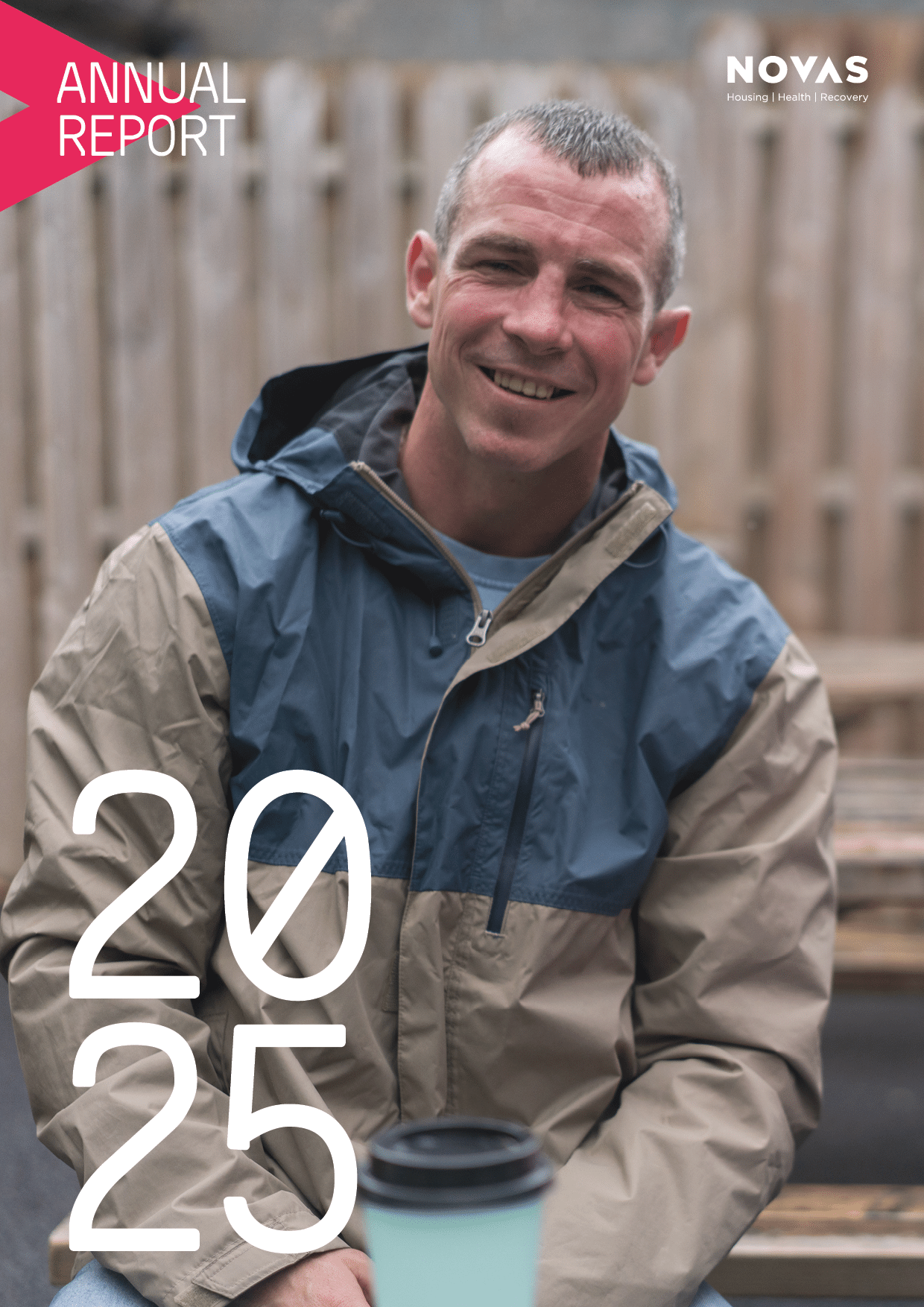
NOVAS today launches its 2025 Annual Report, highlighting the growing length of time people are spending in homelessness and the urgent need to increase access to appropriate, long-term housing. 

In 2025, NOVAS supported 6,211 people, including 1,417 children, across its services, providing accommodation, housing and support to people experiencing homelessness, housing insecurity, addiction and social marginalisation. While this was a slight decrease on the 6,300 people supported in 2024, the report makes clear that this does not reflect a reduction in need. Instead, people are remaining in emergency accommodation for longer periods as access to suitable housing and move-on options becomes increasingly limited.  

The pressure on emergency accommodation is particularly evident among single adults. Across NOVAS emergency homeless accommodation, the average stay in 2025 was 307 nights, or more than ten months. More than 80% of people entering NOVAS homeless accommodation came either from another homeless service or directly from rough sleeping, while just 1% came from stable private rented or social housing. Almost half (48%) came directly from rough sleeping, with this proportion highest in Limerick. 

Prolonged stays also limit the availability of emergency accommodation for people newly experiencing homelessness. As people remain in emergency accommodation for longer, fewer places become available for others who need support, reinforcing the importance of creating effective pathways from homelessness into secure housing. 

Nationally, family homelessness remained a significant concern throughout 2025, with 5,188 children living in emergency accommodation by the end of the year. Against this backdrop, NOVAS supported 1,417 children across its services and housing, with 757 children living in secure NOVAS tenancies by year-end.  

Una Burns, Interim CEO and Head of Advocacy and Communications at NOVAS, said: 

“The 2025 Annual Report shows that people are spending longer periods in homelessness, as access to suitable housing remains limited. Emergency accommodation is intended to provide short-term support, but for many people it is becoming a much longer-term reality. 

“However, homelessness is not inevitable; it is solvable. Housing remains central to the solution. People must be able to move from emergency accommodation into secure homes. With the right investment in housing, prevention and support, we can reduce the time people spend without a home and create genuine pathways out of homelessness.” 

Despite the pressures facing the homelessness system, NOVAS continued to create pathways towards greater stability throughout 2025. As an Approved Housing Body, NOVAS added 24 homes to its housing stock, providing homes for an additional 26 adults and 18 children. By the end of the year, 364 NOVAS homes provided secure tenancies for 1,463 adults and children across Kerry, Clare, Tipperary, Limerick and Dublin. The Annual Report records 364 housing units and 1,463 tenants at year-end.  

The 2025 Annual Report reflects both the continued scale and complexity of homelessness and the progress that is possible when people are supported towards safety, stability and a home of their own. For NOVAS, the focus remains on reducing the time people spend in homelessness, preventing homelessness where possible, and creating sustainable pathways into secure housing. 

Read the full report here

Homeless figures continue to rise as Feburary data is published

Recent homelessness figures for February 2026 highlight a further increase in the number of people experiencing homelessness across the State. The number of adults and children residing in emergency accommodation last month reached 17,308, an increase of 196 compared to the previous month, and almost 2,000 additional individuals over the past twelve months. This represents one of the highest levels of recorded homelessness in the State.

There is growing concern that recent changes to rental regulations may increase the risk of additional households entering homelessness. The number of Notices of Termination issued in the first quarter of 2026 has increased by 41% compared to the same period last year. While these figures relate to a period prior to the introduction of the new legislation, there is evidence of increasing numbers of households presenting to services with a notice to quit, placing further pressure on already stretched emergency accommodation systems.

In our family service in Limerick, 8% of families are currently overholding in their rented accommodation, that is, remaining in their homes beyond the date of termination due to having no alternative housing options, including emergency or hotel accommodation. A further 25% of families we work with are living with a notice to quit and struggling to secure suitable alternative housing.

This situation is deeply concerning and reflects sustained pressure across both the rental market and homeless services.

While the current landscape is extremely challenging, homelessness is not inevitable. With the right policies, it can be significantly reduced and ultimately ended. This will require targeted prevention measures, a substantial increase in the supply of appropriate housing in the right locations, and ring-fenced allocations for households experiencing long-term homelessness.


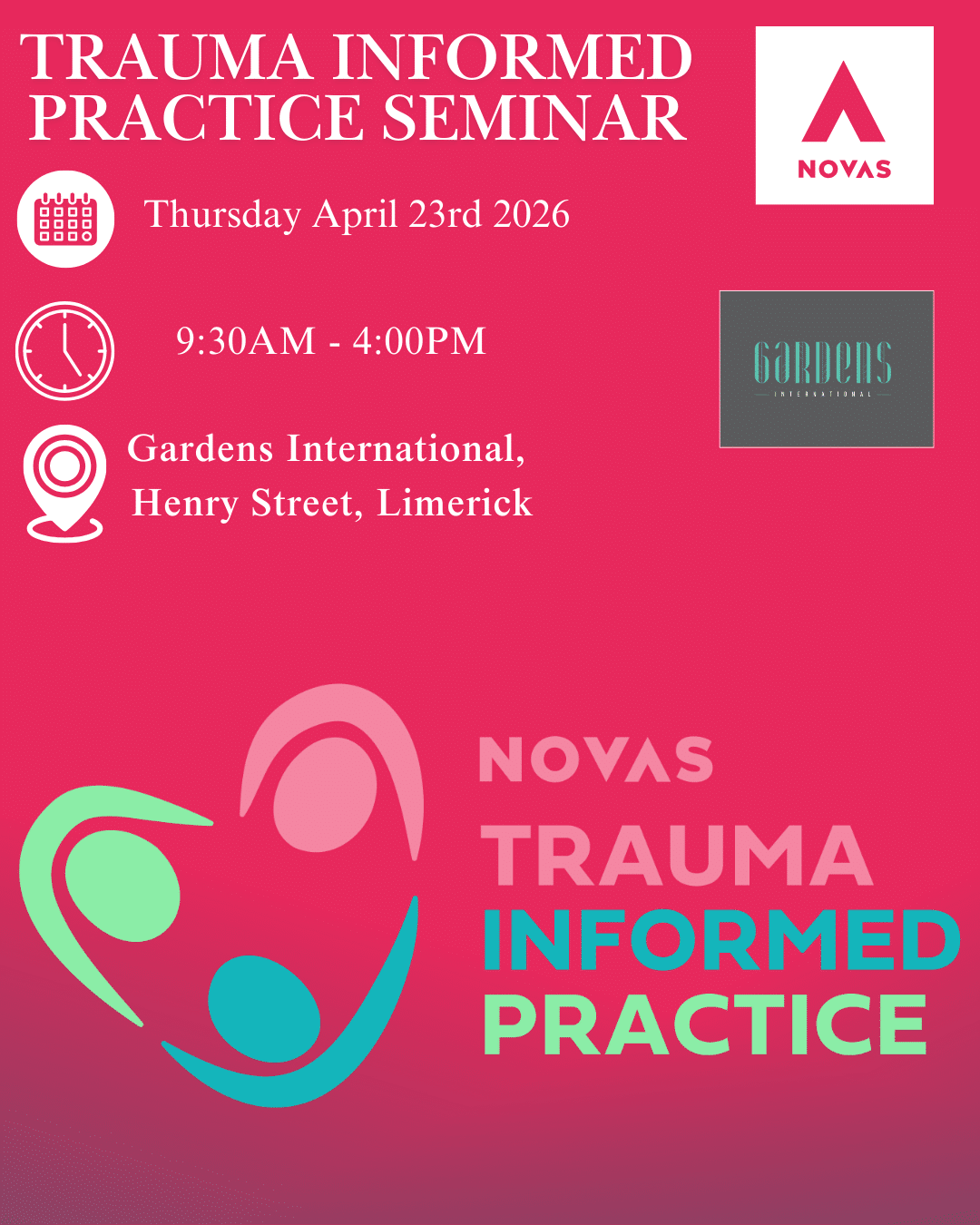
NOVAS Trauma Informed Practice Seminar – Limerick, 23rd of April

NOVAS is delighted to host its second Trauma Informed Practice Seminar on Thursday, 23rd of April in the Gardens International, Limerick: Practice, Empowerment and Recovery from Trauma.

This seminar will explore the value of Trauma Informed Practice in supporting people experiencing multiple disadvantage, with a particular focus on gender, motherhood, service delivery and recovery. It will draw on research highlighting the importance of quality, trauma-informed services and the active role they play in supporting recovery for people affected by complex trauma.

The seminar will examine the lasting impact of generational poverty, ongoing exclusion, and the unintended harm that services can sometimes cause.

We’re delighted to welcome an exceptional panel of speakers:

Destiny Vaughan, Talha AlAli, Dr Orla Muldoon, Dr Daniel O’Callaghan, Ruth Ann Barry, Paula Kearney, alongside powerful contributions from people with lived experience. More speakers to be announced.

The range of speakers will share insights into Trauma Informed Practice across the areas of gender, motherhood, homelessness and the criminal justice system. The seminar will also explore empowerment and the creation of spaces that support healing and recovery, including the introduction of a new Trauma Informed Client Programme.

Join us for a day of learning, reflection and shared knowledge. Tickets can be purchased here.

NOVAS welcomes the new housing strategy but urges immediate action to address the crisis

NOVAS welcomes the Government’s 2025–2030 Housing Plan and its renewed focus on addressing homelessness, while emphasising that sustained action on the ground will be essential to deliver on its ambitions. The commitment to ending homelessness in Ireland by 2030 is significant, but it will require unwavering political will, consistent investment and clear accountability throughout the lifetime of the plan.

We particularly welcome the prioritisation of increased supply of one-bedroom homes for single adults and four-bedroom homes for larger families—two groups that make up a substantial proportion of the people NOVAS supports every day. Addressing their specific needs is critical to reducing the pressure on emergency services and ensuring people can access appropriate, long-term housing.

The plan’s pledge to deliver at least 300,000 new homes by 2030, including 72,000 social homes, is the minimum necessary to meet existing and emerging need. While this commitment is positive, the absence of annual delivery targets is a cause for concern. Without clear year-on-year benchmarks, it will be difficult to measure progress and maintain the momentum required to achieve the plan’s goals.

We also welcome the commitment to develop a cross-departmental, multi-agency Child and Family Homelessness Action Plan, informed by the UN Convention on the Rights of the Child. This long-overdue recognition of the distinct needs of children and families marks an important shift in national policy. The dedicated €100 million fund in 2026 to support families and children exiting long-term homelessness is a crucial and timely intervention.

NOVAS reaffirms its commitment to working alongside Government, local authorities, and partner organisations to deliver housing and support solutions that restore dignity, stability, and independence to people experiencing homelessness.

NOVAS 2024 Annual Report

In 2024, NOVAS worked with 6,300 people across Ireland, providing housing, specialist supports, emergency accommodation and advocacy to individuals and families experiencing or at risk of homelessness. This represents a 160% increase over the past decade and highlights both the scale of the challenge and the depth of our response.

Our 2024 Annual Report reflects a year of innovation, resilience and collaboration. It tells the story of people who have overcome immense obstacles, the dedication of our staff and volunteers and the impact of our partnerships with funders, statutory agencies and community organisations.

Some of the findings are deeply concerning — particularly the growing number of people spending longer periods in emergency accommodation and the continued rise in rough sleeping in Limerick. Yet, the report also offers hope. In 2024, NOVAS provided housing for 1,419 people, offering lasting solutions to homelessness and continued to expand services that prevent homelessness and support recovery.

As Chair of NOVAS’ Board notes, “The housing crisis is solvable and our shared goal of ending homelessness by 2030 is achievable.”

We invite you to explore the 2024 Annual Report to learn more about our work, the people we support, and our plans for the future.

📘 Read the full report

Together, we can build a future where everyone has a place to call home.

NOVAS welcomes increased social housing investment but warns of a worrying silence on homelessness

NOVAS today welcomes several measures in Budget 2026 that have potential to ease housing pressures but warns that much more is needed if the Government is serious about achieving its stated goal of ending homelessness in Ireland by 2030.

The commitment in Budget 2026 to accelerate the delivery of social housing, supported by a major increase in capital investment, is strongly welcomed by NOVAS. The budget, announced by Ministers Paschal Donohoe and Jack Chambers, allocates €19.1 billion for housing and infrastructure next year; an increase of €2 billion on 2025. Of this, €2.9 billion is earmarked for social housing development and acquisition. NOVAS describes these as positive and necessary steps to address Ireland’s housing deficit.

However, the organisation expressed deep disappointment at the absence of any measures specifically focused on homelessness — either through prevention or protection for the thousands of people currently without a home or at imminent risk.

“The word homelessness was scarcely mentioned throughout the budget speeches,” said Una Burns, Head of Advocacy and Communications at NOVAS. “This is deeply disappointing given the scale of the crisis and its impact on thousands of households across Ireland.”

Ms Burns added that NOVAS had submitted a range of recommendations in its Pre-Budget submission, focused on both preventing and responding to homelessness — including adequate, high-quality emergency accommodation, measures to prevent rough sleeping and universal and targeted prevention supports. “There was no mention of any of this in what we heard today,” she continued. “While we warmly welcome the significant capital investment in social housing, we urge Government to ensure that people who experience homelessness have real access to these new homes, so that they are not left behind again.”

NOVAS also noted with concern the lack of any increase in HAP payments, leaving many low-income renters, among the most vulnerable households in the private sector, exposed to continued housing insecurity. “Without addressing affordability in the rental market and preventing entries into homelessness, Ireland will remain trapped in a cycle of crisis,” Ms Burns said.

NOVAS reiterated its commitment to working with Government and local authorities to deliver housing and support solutions that restore dignity, stability and independence for people experiencing homelessness.

NOVAS urges Governemnt to tackle homelessness crisis in Budget 2026

As we approach the release of Budget 2026 on October 7th, NOVAS is again urging the Irish Government to make homelessness a core priority. In a year that has seen record-high levels of homelessness, including more than 5,000 children without a secure home, urgent and decisive action is needed now more than ever.

Every day, NOVAS supports individuals and families experiencing or at risk of homelessness. We see the devastating human cost of policy inaction: children growing up in hotels and B&Bs, families forced into emergency accommodation and vulnerable adults whose health deteriorates without stable housing. Yet we also know that homelessness is preventable and solvable with the right measures.

The current homelessness crisis can be turned around. With evidence-based reforms, targeted funding and political commitment the number of households experiencing homelessness can be significantly reduced, moving us toward the shared national goal of ending homelessness in Ireland by 2030.

In our 2026 Pre-Budget Submission, NOVAS sets out clear, practical recommendations:

  • Accelerate the delivery of social and affordable housing through increased capital investment and higher annual supply targets.

  • Prevent homelessness before it begins by expanding rent supports, supporting targeted schemes such as tenant-in-situ and Housing First and scaling up early intervention measures for at-risk households.

  • Strengthen frontline homeless services, ensuring high-quality service provision, prioritising single-room occupancy and providing sustainable funding for organisations working directly with people in crisis.

  • Improve health outcomes for people experiencing homelessness with ring-fenced funding for mental health, addiction and dual diagnosis services.

Una Burns, Head of Advocacy and Communications with NOVAS, noted:
“While homelessness continues to grow, we know that it is solvable. With the right policies and investment we can make lasting change for thousands of households across the country and realise our collective ambition of ending homelessness.”

NOVAS is calling on the Government to use Budget 2026 as a turning point — by investing in the homes, services and supports that will give people the stability and dignity they deserve.

Read our 2026 Pre-Budget Submission.

ENDS

Homelessness exceeds 16,000 people for the first time ever

Homelessness in Ireland has reached record levels throguhout 2025. For the first time ever, national figures exceed 16,000, with more than 5,000 children living in emergency homeless accommodation. According to the latest figures published by the Department of Housing, 16,058 people are experiencing homelessness. This marks an increase of 143 compared to the previous month and a rise of 1,755 compared to the numbers reported in July 2024. The numbers continue to rise unabated. Urgent and decisive action from the government is needed now more than ever. 

The data only includes individuals accessing state funded emergency homeless accommodation across Ireland. People who are rough sleeping, living in squats, living in domestic violence refuges or those who are hidden homeless are not included in the figures. People who seek International Protection are also not captured in this data. 

This week thousands of children returned to school from a hotel room, many of whom have been living in these utterly unsuitable arrangements for years. We must ringfence social housing for households who experience long-term homelessness and we must invest in preventative measures. 

As we approach Budget 2026, we urge the government to ensure that housing supply, homeless accommodation and comprehensive prevention measures are adequately and sustainably resourced. Only by addressing these areas at the scale required can we meaningfully respond to the ongoing housing and homelessness crisis. 

July 2025 Key Statistics: 

  • Total homeless population: 16,058 
  • Adults: 11,044 
  • (of which) Single adults: 7,075 
  • Young adults (ages 18 – 24): 1,932 
  • Families: 2,343 
  • (of which) single parent families: 1,348 
  • Children (under 18): 5,014 


Gender Breakdown (Adults): 

  • Male: 6,665 
  • Female: 4,379 

May homeless figures show further increases

Homelessness in Ireland has again reached a record high of 15,747 according to the latest figures published by the Department of Housing. This marks an increase of 167 people compared to the previous month and a rise of 1,588 compared to the numbers reported in May 2024. The rising numbers highlight the intensifying demand for emergency accommodation amidst a worsening housing crisis in Ireland.  

Who does this include? 

These figures include individuals accessing state funded emergency homeless accommodation across Ireland. People who are rough sleeping, living in squats, living in domestic violence refuges or those who are hidden homeless are not included in the figures. People who seek International Protection are also not captured in this data. 

The data is compiled monthly and published during the last full working week of the following month. It offers regional and country- level insights. 

May 2025 Key Statistics: 

  • Total homeless population: 15,747 
  • Adults: 10,903 
  • (of which) Single adults: 7,064 (65%) 
  • Young adults (ages 18 – 24):  1,851 (17%) 
  • Families: 2,273 
  • (of which) single parent families: 1,307 (58%) 
  • Children (under 18): 4,844 

Increasing housing supply, prioritising homes for families in emergency accommodation and increased focus on prevention measures are key to solving the crisis.

Newsletter Sign Up

Be the first to know about what’s happening at NOVAS